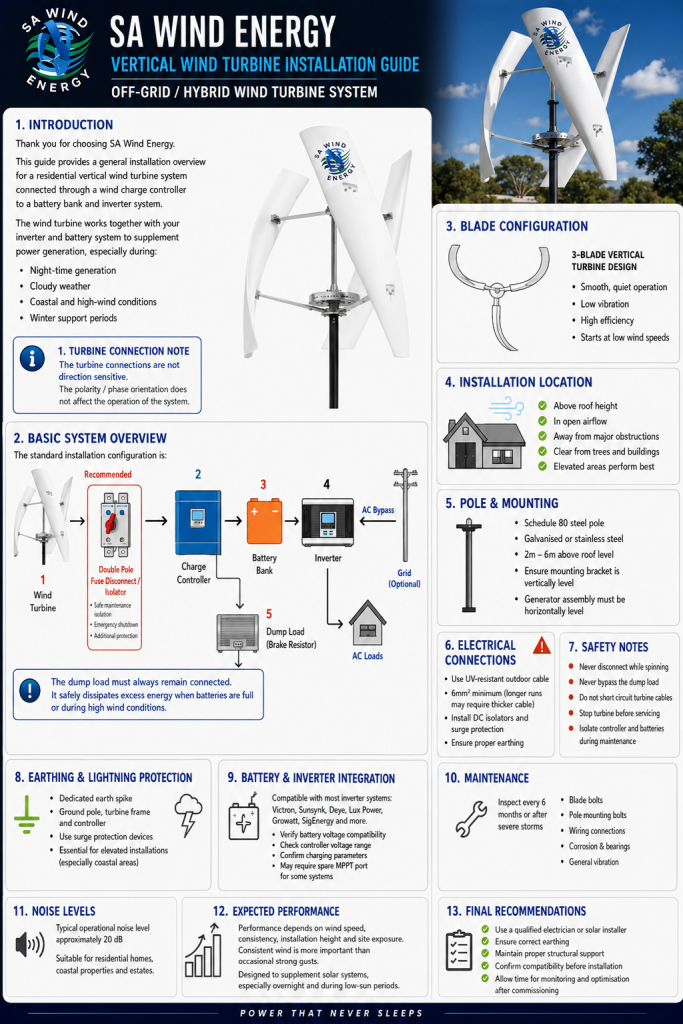
SA Wind Energy – Vertical Wind Turbine Installation Guide
Off-Grid / Hybrid Wind Turbine System
- Introduction
Thank you for choosing SA Wind Energy.
This guide provides a general installation overview for a residential vertical wind turbine system connected through a wind charge controller to a battery bank and inverter system.
- The turbine connections are not direction sensitive.
This means the turbine input wiring to the controller does not require phase orientation matching during installation.
The installation shown is suitable for:
- Off-grid systems
- Hybrid solar/wind systems
- Battery charging support
- Existing inverter installations
The wind turbine works together with your inverter and battery system to supplement power generation, especially during:
- Night-time generation
- Cloudy weather
- Coastal and high-wind conditions
- Winter support periods
- Basic System Overview
The standard installation configuration is:
Double Pole Fuse Disconnect
Between the Wind Turbine and Charge Controller in the system diagram, add:
- Recommended: Double Pole Fuse Disconnect / Isolator
Installed between the turbine and controller for:- Safe maintenance isolation
- Emergency shutdown capability
- Additional electrical protection
Suggested connection flow:
Wind Turbine
↓
Double Pole Fuse Disconnect
↓
Charge Controller
↓
Battery Bank
- Wind Turbine
- Wind Charge Controller
- Dump Load / Brake Resistor
- Battery Bank
- Inverter
- AC Loads / Grid Backup
The charge controller regulates turbine voltage and protects the batteries from overcharging.
The dump load is extremely important and must always remain connected. It safely dissipates excess energy when batteries are full or during high wind conditions.
- Installation Location
Recommended Mounting Areas
The turbine should ideally be installed:
- Above roof height
- In open airflow
- Away from major obstructions
- Clear from trees and surrounding buildings
- On elevated sections of the property where possible
Ideal Wind Conditions
Best performance is achieved in:
- Coastal regions
- Hilltops
- Open farmland
- Elevated suburban areas
Avoid:
- Wind shadows behind buildings
- Turbulent airflow zones
- Areas directly below taller structures
- Pole & Mounting Requirements
Pole Recommendations
Recommended:
- Schedule 80 steel pole
- Galvanised or stainless steel preferred
- Properly braced where required
Typical pole height:
- 2m to 6m above roof level depending on site conditions
Roof Mounting
When mounting to a roof:
- Ensure structural integrity
- Use chemical anchors where applicable
- Waterproof all roof penetrations
- Ensure the turbine is perfectly level
Very important:
- The mounting bracket must be vertically level
- The generator assembly must remain horizontally level
- Electrical Connections
Standard Connection Flow
Wind Turbine
↓
Wind Charge Controller
↓
Battery Bank
↓
Inverter
↓
AC Loads
Dump Load Connection
The dump load:
- Must remain permanently connected
- Must never be bypassed
- Protects the turbine during strong winds and battery full conditions
- Cable Recommendations
Typical recommendations:
- 6mm solar cable minimum
- Larger cable for longer distances
- UV-resistant outdoor cable
- Proper cable glands and conduit protection
All installations should include:
- DC isolators
- Proper earthing
- Surge protection
- Earth spike connection
- Earthing & Lightning Protection
Because wind turbines are elevated structures, proper grounding is essential.
Recommended:
- Dedicated earth spike
- Proper grounding of:
- Pole
- Turbine frame
- Controller
- Lightning surge protection devices
Coastal installations should preferably use:
- Stainless steel hardware
- Marine-grade fasteners
- Anti-corrosion protection
- Battery & Inverter Integration
The system may be connected to:
- Victron
- Sunsynk
- Deye
- Lux Power
- Growatt
- SigEnergy
- Other compatible inverter systems
Depending on configuration:
- Direct battery charging may be used
- MPPT wind controller integration may be used
- Spare MPPT ports may be required for some systems
Always verify:
- Battery voltage compatibility
- Controller voltage range
- Charging parameters
- Maximum turbine input ratings
- Safety Notes
Important
Never:
- Disconnect the turbine while spinning under load
- Operate without the dump load connected
- Short circuit turbine cables
- Work on the turbine during high winds
Before servicing:
- Stop the turbine safely
- Isolate the controller
- Disconnect batteries where necessary
- Maintenance
The SA Wind Energy vertical turbine system is designed for low maintenance.
Recommended inspection intervals:
- Every 6 months
- After severe storms
- Coastal installations may require more frequent inspections
Inspect:
- Blade bolts
- Pole mounting bolts
- Wiring connections
- Corrosion
- General vibration
- Noise Levels
Typical operational noise levels are low and generally around:
- Approximately 20 dB under normal operating conditions
This makes the vertical turbine suitable for:
- Residential homes
- Coastal properties
- Estates
- Hybrid solar installations
- Expected Performance
Wind turbine output depends entirely on:
- Wind speed
- Turbulence
- Installation height
- Site exposure
Generally:
- Consistent wind is more important than occasional strong gusts
- Coastal and elevated sites perform best
- Wind turbines are intended to supplement existing solar systems, especially overnight and during low-sun conditions
- Final Recommendations
For best results:
- Use a qualified electrician or solar installer
- Ensure correct earthing
- Maintain proper structural support
- Confirm compatibility before installation
- Allow time for monitoring and optimisation after commissioning
The SA Wind Energy turbine system is designed as a reliable renewable energy add-on to existing solar and battery systems, helping provide more balanced 24/7 energy support.
SA Wind Energy – “Power That Never Sleeps”